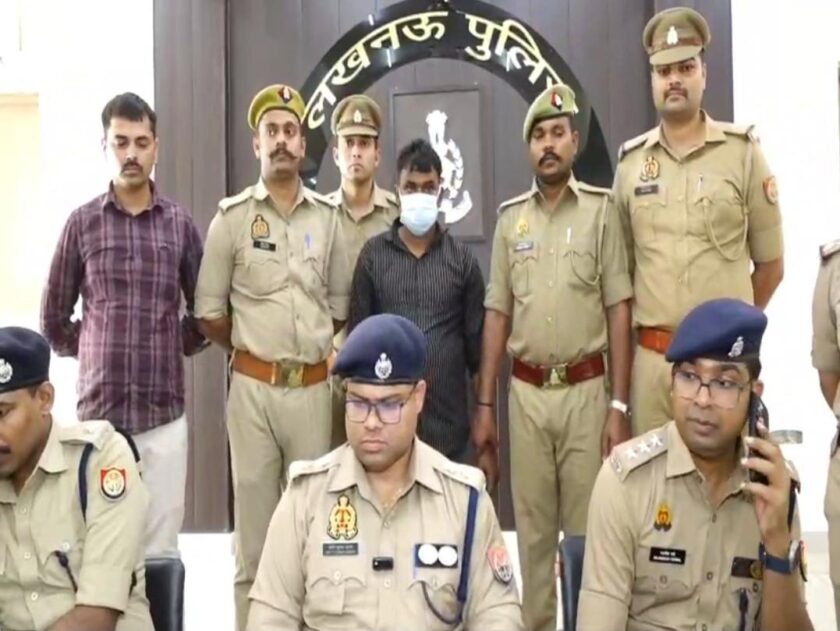
Lucknow: The year 2025 will be remembered as a pivotal chapter in Uttar Pradesh’s law and order journey. Home to more than 25 crore people and spread across one of the most socially and economically complex landscapes in India, Uttar Pradesh has historically faced challenges of organised crime, political violence, communal tensions, and systemic policing gaps. Yet, under Chief Minister Yogi Adityanath’s administration, the state continued its aggressive “zero-tolerance” approach towards crime, steadily reshaping its law enforcement narrative.
Building on reforms initiated since 2017, 2025 reflected consolidation rather than experimentation. The focus remained on dismantling criminal networks, improving conviction rates, deploying technology-driven policing, and ensuring public order during massive religious, political and cultural events. While challenges such as cybercrime, trafficking, and isolated communal flare-ups persisted, the overall trajectory indicated a state increasingly confident in its policing capacity.
Overall Crime Trends: A Downward Curve
According to provisional assessments based on NCRB indicators and state police data, Uttar Pradesh recorded a 15–20 per cent decline in overall cognisable crimes in 2025 compared to the previous year. Total registered cases fell from nearly 6.5 lakh in 2024 to approximately 5.5 lakh, a drop attributed to preventive policing, intelligence-led operations, and improved response mechanisms.
Violent crimes showed a notable reduction. Murders declined by nearly 18 per cent, settling at around 3,800 cases statewide. Rioting, grievous assault, and cases linked to organised violence also witnessed a steady fall. Officials credited faster investigations, enhanced forensic support, and visible deterrence created through targeted operations against habitual offenders.
Property-related crimes, including theft, burglary and vehicle lifting, declined by over 22 per cent, particularly in urban centres. The expansion of CCTV surveillance under the Safe City and Smart City projects — with over 1.5 lakh cameras operational — played a crucial role in prevention and post-crime tracking.
Cybercrime: The Rising Frontier
While conventional crimes declined, cybercrime emerged as the fastest-growing challenge. The state recorded a 25 per cent surge, with more than 15,000 cases related to online fraud, phishing, identity theft and digital extortion.
Large-scale scams targeting urban residents, senior citizens and first-time investors dominated the crime landscape. In response, the government operationalised 75 new cyber police stations, expanded cyber forensic labs, and strengthened coordination with banks and telecom operators to freeze fraudulent accounts swiftly.
Awareness campaigns and school-level digital safety programmes were launched, but officials acknowledged that cyber policing capacity will require sustained expansion in the coming years.
Women and Child Safety: Measured Gains, Lingering Concerns
Women’s safety remained a political and administrative priority. Crimes against women declined by nearly 10 per cent, with notable reductions in dowry deaths, acid attacks and public harassment cases. However, domestic violence complaints remained high, reflecting deeper social challenges rather than policing failures alone.
The 1090 Women Power Line, Pink Booths, women help desks and Mission Shakti initiatives were expanded across districts. Conviction rates in gender-based crimes improved, aided by fast-track courts and stronger prosecution support.
Child-related crimes, including those under the POCSO Act, declined by 14 per cent. Increased school safety audits, community awareness programmes and quicker rescue operations contributed to the trend.
Anti-Mafia Drive: Dismantling Criminal Empires
One of the most defining features of Uttar Pradesh’s law and order strategy in 2025 was the continued crackdown on organised crime and mafias. By mid-year, the government declared large parts of the state “mafia-mukt”, citing the dismantling of criminal ecosystems that once exercised parallel authority.
More than 5,000 properties worth over ₹3,000 crore linked to gangsters were seized or attached under the Gangsters Act and other provisions. Illegal structures were demolished, financial assets frozen, and key operatives jailed.
Several high-profile encounters and arrests — particularly in western and eastern Uttar Pradesh — sent a strong deterrent message. While human rights groups raised concerns over encounter-based policing, most cases cleared judicial scrutiny, reinforcing the state’s claim of lawful action.
High-Impact Operations and Major Incidents
The year witnessed several significant law enforcement operations. Early 2025 began with the neutralisation of a notorious gangster in Saharanpur, linked to dozens of murders. In Gorakhpur, police busted a major human trafficking racket with cross-border links, rescuing over 200 victims.

A massive drug seizure in Bareilly disrupted a narcotics syndicate operating across northern India, while in Meerut, a fake currency network was dismantled in December, recovering counterfeit notes worth ₹10 crore.
Communal incidents remained limited, with fewer than 50 reported cases statewide — a sharp decline from previous years. Preventive intelligence, peace committees and rapid deployment of forces helped contain tensions during sensitive festivals.
Policing the Mahakumbh: A Stress Test Passed
The Mahakumbh Mela in Prayagraj, which drew an unprecedented 66 crore devotees, became the ultimate test of Uttar Pradesh’s policing and crowd management capabilities. Over 50,000 police and security personnel were deployed, supported by AI-driven surveillance, drones, facial recognition systems and real-time crowd analytics.
Despite the scale, crime incidents were minimal. A tragic stampede on Mauni Amavasya that claimed 12 lives led to a judicial inquiry and immediate procedural reforms. Overall, global observers hailed the event as a benchmark in mass gathering security management.
Police Modernisation and Institutional Reforms
2025 saw accelerated police modernisation across Uttar Pradesh. The Trinetra facial recognition system helped identify suspects and led to over 10,000 arrests. Body-worn cameras improved accountability, reducing complaints against police personnel by nearly 30 per cent.
The 112 Emergency Response System handled over 50 lakh distress calls, with average response times of eight minutes in urban areas. Community policing initiatives such as Police Mitras and village vigilance committees strengthened grassroots trust.
Training academies incorporated AI, cyber forensics and behavioural policing modules, upskilling over 20,000 personnel. Internal vigilance drives led to action against corrupt officers, enhancing institutional credibility.
Law and Order as an Economic Enabler
Perhaps the most far-reaching impact of improved law and order was its contribution to economic confidence. Uttar Pradesh attracted investment commitments exceeding ₹40 lakh crore, with investor summits and industrial corridors citing security and stability as key factors.
Tourism boomed, religious circuits flourished, and global events drew visitors in record numbers. The improved law and order environment directly supported employment, infrastructure growth and urban expansion.
Challenges That Persist
Despite progress, challenges remain. Rural policing infrastructure lags behind urban areas. Cybercrime response capacity needs further expansion. Jail overcrowding continues, raising rehabilitation concerns. Allegations of excessive force, though fewer, underline the need for continued oversight.
Climate-linked disputes, water conflicts and environmental crimes emerged as new frontiers requiring specialised policing approaches.
A Landmark Year, Not a Finish Line
The law and order narrative of Uttar Pradesh in 2025 marked a decisive shift from reactive governance to proactive control. Crime reduction, mafia dismantling, technological integration and successful management of mega events redefined public perception of policing in the state.
While the journey towards a fully secure and just Uttar Pradesh continues, 2025 stands out as a landmark year — one that strengthened public trust, improved investor confidence, and laid a firm foundation for long-term stability. As the state marches towards its goal of becoming a trillion-dollar economy, law and order will remain its most critical pillar — and in 2025, that pillar stood stronger than ever.